Multimedia Gallery

Images

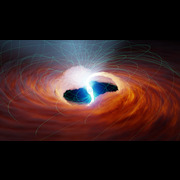
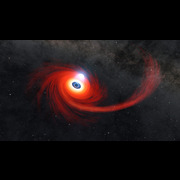
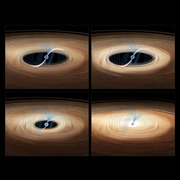
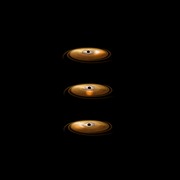
Black Holes: Monsters in Space
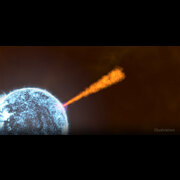
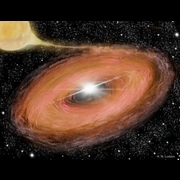
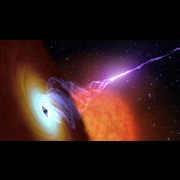
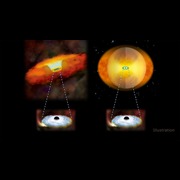
This artist's concept illustrates a supermassive black hole with millions to billions times the mass of our sun.
 
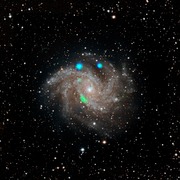
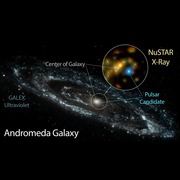
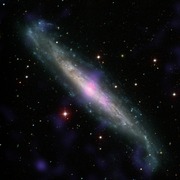
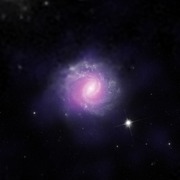
Blazing Black Holes Spotted in Spiral Beauty
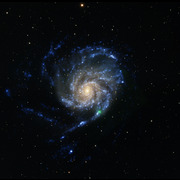
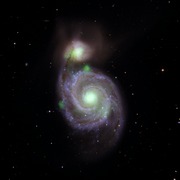
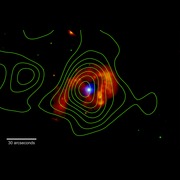
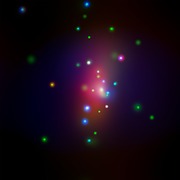
NuSTAR is the first orbiting telescope to take focused pictures of the cosmos in high-energy X-ray light.
 
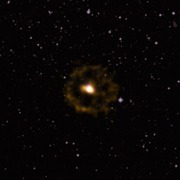
Sizzling Remains of a Dead Star
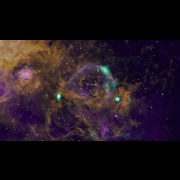
This new view of the historical supernova remnant Cassiopeia A, located 11,000 light-years away, was taken by NASA's Nuclear Spectroscopic Telescope Array, or NuSTAR.
 
NASA's Nuclear Spectroscopic Telescope Array, or NuSTAR, has captured these first, focused views of the supermassive black hole at the heart of our galaxy in high-energy X-ray light. Image credit: NASA/JPL-Caltech
NuSTAR Spots Flare From Milky Way's Black Hole
NuSTAR has captured these first focused views of the supermassive black hole at the heart of our galaxy. . 
Celebrating 100 days in orbit
Celebrating 100 Days in Orbit
NuSTAR celebrated 100 days in orbit on Sept. 21, 2012. 
SN1987A
SN1987A
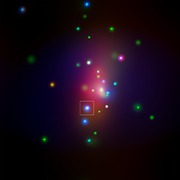
In September 2012, NuSTAR obtained deep observations of SN 1987A, a supernova in the Large Magellanic Cloud, approximately 168,000 light-years away. 
Observing Sagittarius A-star
Observing Sgr A*
NuSTAR observed SgrA*, the black hole at the center of our Galaxy, as part of a large, international, multi-wavelength campaign. 
First Light Party
First Light Party
NuSTAR has seen the light and there was a party to commemorate the event.
NuSTAR First Light
NuSTAR First Light
NuSTAR has taken its first snapshots of the highest-energy X-rays in the cosmos, producing images that are much crisper than previous high-energy telescopes.
NuSTAR in Space
NuSTAR in Space
NASA's newest X-ray telescope is now fully deployed in orbit, allowing it to see high-energy objects like feeding black holes.
Final Steps in Mating NuSTAR to its Rocket
Mating NuSTAR to its Rocket
Inside an environmental enclosure at Vandenberg Air Force Base's processing facility in California, technicians complete the final steps in mating NuSTAR and its Orbital Sciences Pegasus XL rocket.
Wrapping NuSTAR in Its Rocket Nose Cone
An Orbital Sciences technician completes final checks of NuSTAR inside the Orbital Sciences processing facility.
NuSTAR in Space
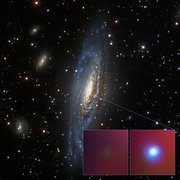
Bringing Black Holes Into Focus
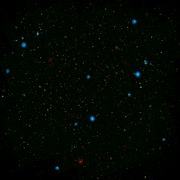
This image comparison demonstrates NuSTAR's improved ability to focus high-energy X-ray light into sharp images.
NuSTAR's carrier plane landing.
The Pegasus Rockect attached to Stargazer, the carrier aircraft.
The Pegasus rockect holding NuSTAR attached to Stargazer, the carrier aircraft.
Schematic of the Pegasus XL Launch Vehicle.
Schematic of the Pegasus XL Launch Vehicle
NuSTAR Mission Profile.
Pegasus XL NuSTAR Mission Profile
NuSTAR Satellite.
Artist's Concept of NuSTAR
NuSTAR has a 10 meter mast that deploys after launch to separate the optics modules from the detectors in the focal plane.
NuSTAR Satellite.
NuSTAR Unloading
Workers push the handling dolly supporting NASA's NuSTAR, enclosed in a protective shroud, into a environmental enclosure.
NuSTAR Satellite.
NuSTAR Unloading
Workers secure NASA's Nuclear Spectroscopic Telescope Array (NuSTAR) onto a handling dolly.
NuSTAR Satellite.
NuSTAR Unloading
Workers monitor NASA's NuSTAR as it is lowered onto a handling dolly.
NuSTAR Satellite.
NuSTAR Unboxing
In the airlock at Vandenberg Air Force Base.
NuSTAR Unboxing.
NuSTAR Unboxing
In the airlock at Vandenberg Air Force Base.
Pegasus Rocket.
Pegasus Rocket
The Pegasus rocket in which NuSTAR will be launched.
NuSTAR Satellite.
NuSTAR Satellite
Computer graphic of what the NuSTAR satellite would look like, fully extended.
NuSTAR Arrives at Vandenberg Air Force Base in California.
NuSTAR Arrives at Vandenberg
Enclosed in an environmentally controlled shipping container, NuSTAR arrives at Vandenberg Air Force Base in California. Credit: NASA
NuSTAR Ships to Vandenberg
NuSTAR begins the journey to the launch pad.  Credit: OSC.
NuSTAR at OSC, 4 of 4
NuSTAR at OSC, Jan. 2012
The integrated NuSTAR observatory at Orbital Sciences Corporation in January 2012.  Credit: OSC.
NuSTAR at OSC, Jan. 2012
The integrated NuSTAR observatory at Orbital Sciences Corporation in January 2012.  Credit: OSC.
NuSTAR Sticker
NuSTAR Sticker
NuSTAR promotional sticker.
NuSTAR at OSC
NuSTAR at OSC
The integrated NuSTAR observatory at Orbital Sciences Corporation in June 2011.
NuSTAR at OSC, 2 of 2
The integrated NuSTAR observatory at Orbital Sciences Corporation in June 2011.
Artist's Concept, 1 of 2
Artist's concept of NuSTAR on orbit.
Artist's Concept, 1 of 2
Artist's Concept, 2 of 2
Artist's concept of NuSTAR on orbit.
JPL Delivery
JPL Delivery
NuSTAR instrument at JPL on April 19, 2011. The instrument shipped to Orbital on April 23rd.
Final Pre-Launch Mast Deployment
Final pre-launch mast deployment, in December 2010 at ATK-Goleta.
FM0 Completed!
First Optics Module Completed!
Assembly of the first NuSTAR optics module was completed on August 5th at Columbia University’s Nevis Laboratory. In reflection: Todd Decker.
Assembly of First Optics Module
Assembly of 1st Optics Module
The first NuSTAR optics module at Columbia University on 2010 May 16, showing 82 of the eventual 133 layers.
Stowed Mast
Stowed Mast
NuSTAR's extendable mast, built by ATK-Goleta, during deployment testing in August 2009.
Deployed Mast
Deployed Mast
NuSTAR's extendable mast, built by ATK-Goleta, during deployment testing in August 2009.
Pegasus Launch Vehicle
Pegasus XL Launch Vehicle
Orbital Sciences Corporation's Pegasus rocket seen just after being dropped from the L-1011 aircraft.
Slumped-Glass Optics
Glass sheets atop atop quartz mandrels at NASA’s Goddard Space Flight Center, prior to slumping. Credit: NASA/GSFC.
Protoflight Mast
Protoflight Mast
Three-bay prototype of the deployable NuSTAR mast. Credit: ATK Goleta.